
The holidays have their own soundtrack: glasses clinking across a crowded table, bottles popping open, someone raising a glass and exclaiming, “Cheers!” But the magic of a holiday drink doesn’t have to be about what’s inside the glass.
It's the ritual, the glassware, the toast. The feeling of marking a moment together. And that doesn’t mean you have to give up the ritual just because you're changing what you drink.
Whether you're sober curious, taking a break from alcohol, alternating alcoholic and non-alcoholic drinks, or simply looking for something different to sip this season, the holidays can still feel festive, indulgent, and celebratory.
In fact, winter may be an especially natural time to experiment with drinking differently.
Key Takeaways
- Celebrate the ritual, not just the drink. Holiday traditions are about connection, celebration, and shared moments—not necessarily alcohol.
- Embrace winter's slower rhythm. Traditional Chinese medicine views winter as a time for rest, warmth, and nourishment, offering inspiration for more intentional holiday rituals.
- Explore warming and bitter botanicals. Ingredients like ginger, cinnamon, citrus, and herbal bitters add depth and complexity to non-alcoholic holiday drinks.
- Make every guest feel included. A festive toast bar with alcoholic and non-alcoholic options allows everyone to celebrate their way.
- Create new traditions. Whether you're cutting back, alternating drinks, or simply exploring something new, botanical beverages can make holiday moments feel just as special.
Why Winter Asks for Something Different
Traditional Chinese medicine (TCM) approaches winter as a season of yin. It’s a time for turning inward, conserving energy, staying warm, and allowing the body and spirit to rest.
This philosophy is closely connected to the traditional practice of yangsheng, often translated as “nourishing life.” Rather than treating health as something we pursue the same way all year long, yangsheng emphasizes living in harmony with changing seasonal conditions.
The Huangdi Neijing, one of the foundational texts of Chinese medicine, describes winter as a season of bi cang, or “closing and storing.” Its guidance includes going to bed earlier, rising later, seeking warmth, and avoiding practices that unnecessarily deplete the body's resources.
It's a very different rhythm from the modern holiday season, where December can bring late nights, rich meals, packed calendars, travel, parties, and plenty of reasons to stay up just a little longer. TCM offers another possibility: what if winter isn't asking us to do more, but to become more intentional about what we consume, how we celebrate, and where we put our energy?
Traditional winter foodways across cultures often emphasize warmth and nourishment, and TCM dietary traditions similarly use warming ingredients and preparations during colder months. Ginger, for example, has a long history of use in Chinese medicine and is traditionally characterized as warming. Modern research has also investigated ginger for digestive and gastrointestinal effects, although the strength of evidence varies by use.
Winter drinking can become an extension of this philosophy, embracing the warming, aromatic, complex, and slow components.
The Social Pressure Problem & Why Ritual Helps
One of the hardest parts of changing how you drink isn't necessarily the drink itself. It's the social moment (or anxiety) around it. Holiday gatherings can come with an invisible script: wine with dinner, champagne at midnight, cocktails at the party, a round of drinks because “it's the holidays.”
There can also be direct or indirect pressure to drink. The National Institute on Alcohol Abuse and Alcoholism notes that both forms of social pressure can make it harder for people who are trying to change their drinking habits.
But there's a simple way to make the choice feel less conspicuous by choosing non-alcoholic cocktails that mimic the ritual and taste of their boozy twin. Here’s how.
What's in the Glass: Warming, Bitter, and Botanical
One of the pleasures of drinking differently is discovering that a complex drink doesn't need alcohol to be interesting.
Warming botanicals
Ginger is a natural place to start. In TCM, ginger is traditionally considered warming and is used in preparations associated with the digestive system. Modern clinical research has found evidence for ginger's usefulness in some gastrointestinal contexts, particularly nausea, although it shouldn't be treated as a universal digestive remedy.
Other winter-friendly ingredients can include cinnamon, citrus peel, cardamom, clove, and aromatic herbs and spices. These components bring an aromatic complexity that makes you want to slow down and actually taste it. Together, they create drinks that feel warming and layered rather than simply sweet.
The appeal of bitter
Bitterness can also give a drink complexity that is often missing from conventional mocktails.
Bitter botanicals have a long history in herbal traditions, where they have traditionally been used around meals and in preparations intended to support appetite and digestion. Research into bitter taste receptors and digestive physiology is ongoing, and some studies suggest that bitter compounds can influence digestive processes (evidence for specific bitter preparations remains limited).
By adding bitters to your drink, you can appreciate the depth, contrast, and a more grown-up flavor profile than a typical mocktail.
Hosting Differently: Build a Toast Bar
If you're hosting an event this holiday season, you don't need to create a separate “non-alcoholic station” that makes guests feel like they're being handed the kids’ table.
Instead, you can create a toast bar where everyone gets to build a drink according to their own preference. Some ideas to help everyone feel included:
- A warming botanical infusion
- Sparkling water
- Citrus wedges and twists
- Fresh herbs
- Pomegranate or cranberry
- Ginger
- Seasonal spices
- A botanical concentrate or herbal blend
- Ice and festive garnishes
Alcohol can be available alongside everything else for guests who want it. The important part is that every drink gets treated like a real drink.
That's good hosting—not because everyone needs to drink the same thing, but because everyone deserves to feel included in the ritual.

A Holiday Ritual for Drinking Differently
You can also make drinking a quieter, more personal practice. Instead of reaching automatically for a glass of wine at the end of a long December day, create a small evening ritual around a botanical drink. After you choose your favorite glass or mug, add your own botanical blend and take time to savor the aroma and then taste. Let the drink become a signal that the day's outward energy is beginning to settle.
For an evening ritual, Rasāsvāda's Rose Bergamot offers a caffeine-free botanical option with an aromatic, floral-citrus character. It can be served warm as a simple nighttime ritual or incorporated into a more elaborate holiday drink.
For something with a deeper, more bitter botanical character, Black Ginger can bring complexity to a winter evening ritual or holiday toast.
The point isn't to make either one a substitute for something else. It's to give yourself, and your guests, options.
The Invitation, Not the Rule
There is no single “right” way to drink during the holidays. Some people will drink alcohol. Some won't. Some will alternate between the two. Some will decide to take a month off. Some will simply discover that they enjoy having more choices.
None of those choices has to change the meaning of the celebration.
Because what we’re celebrating isn’t alcohol. It’s the people around the table, the year we've made it through, the meal we've prepared.
So this holiday season, consider changing what's in the glass—not necessarily because you have to drink differently, but because you can.
The ritual remains. Only the pour has changed.
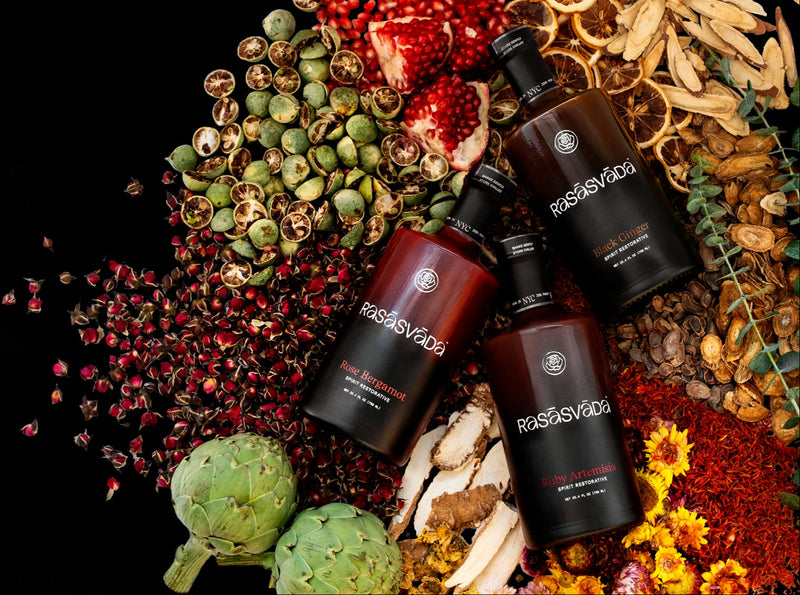
Explore a Different Kind of Holiday Drink
Discover all three Rasāsvāda expressions with one 375ml bottle each of Ruby Artemisia, Black Ginger, and Rose Bergamot.
- Whole plants, thoughtfully sourced from six continents, wild-harvested and handpicked at peak potency.
- Slowly simmered using traditional methods with layered decoctions of roots, bark, seeds, and other botanicals.
- Rooted in tradition, backed by modern science combining herbal wisdom with the rigor of longevity research.
FAQs
Disclaimer
This content is for educational purposes only and is not intended as medical advice. Consult a qualified healthcare professional before starting any new herbal regimen, especially if you are pregnant, nursing, having existing medical conditions, or taking medication.
100% plants. 0% preservatives.