
Whether or not you’re familiar with cinchona bark, it's likely you’ve benefited from it. The bark’s most famous compound, quinine, is used to flavor tonic water and was also the world’s first antimalarial drug, responsible for saving millions of lives.
This beneficial bitter botanical has been valued for centuries by the indigenous people of the Andean region, to the Spanish Jesuits, and eventually to people across Europe and beyond.
Today, scientists continue to explore the health-promoting potential of cinchona bark—from its antioxidant and digestive-supporting effects to its role in easing muscle cramps and supporting satiety.
Read on to uncover the origins, history, and health benefits of cinchona bark.
Botanical Overview
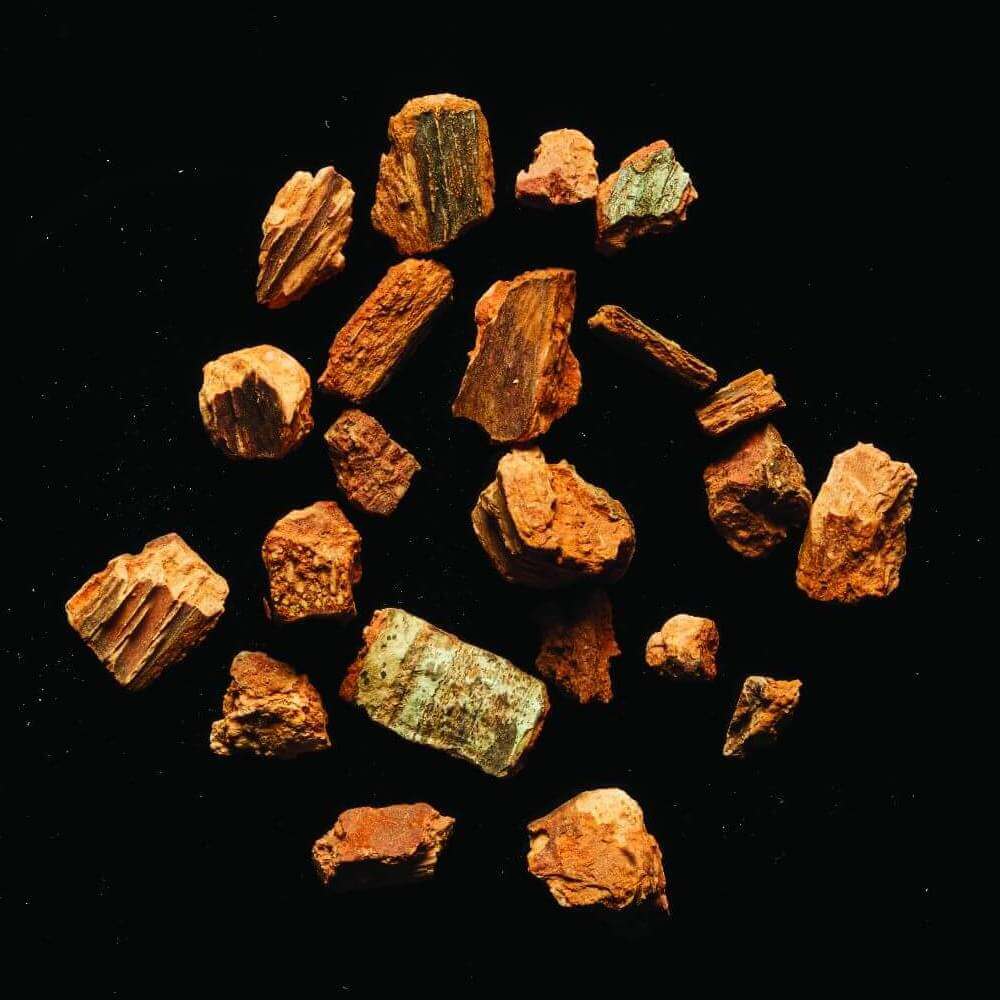
- Botanical Name: Cinchona officinalis (and related species such as Cinchona pubescens, Cinchona calisaya)
- Family: Rubiaceae
- Common Names: inchona, Peruvian bark, Jesuit’s bark, Quinine bark
- Location: Native to the Andean regions of South America. Cultivated in tropical regions such as India, Indonesia, and parts of Africa.
What is Cinchona Bark?
Cinchona bark comes from the Cinchona tree— a small tree that grows at high elevations deep in the Andean forest, which spans Venezuela, Colombia, Ecuador, Peru, and Bolivia. There are many species of the cinchona tree, all of which have varying levels of quinine, the medicinal compound that makes these trees so valuable. One prized species, Cinchona officinalis, which earned the title as the national tree of Ecuador and Peru, is now considered near-threatened due to overharvesting and deforestation.
Cinchona bark is a reddish brown color and is most often ground into a powder and steeped or encapsulated for medicinal purposes. It has a bitter, earthy, and tannic taste and is used to flavor tonic water.

History & Traditional Use
Cinchona bark has a complex and somewhat controversial history, but one fact is undisputed: it’s rich in quinine, a compound prized for being the world’s first effective antimalarial drug.
The controversy centers around who first discovered cinchona’s antimalarial properties. For centuries, it was believed that Spanish Jesuits were the first to recognize its value, using the bark to treat the Countess of Cinchona, the wife of a Peruvian viceroy, who had fallen ill with fever and chills, classic symptoms of malaria. When she recovered, the tree was named in her honor.
The discovery of cinchona bark is now credited to the Quechua, the Cañari and the Chimú peoples, Indigenous people of what is now known as Peru, Bolivia, and Ecuador. They passed their knowledge on to the Spanish Jesuits, who then established trade routes through Europe.
Today, while quinine is still used as an anti-malarial treatment, cinchona bark has other uses, including promoting digestive comfort, satiety, easing muscle cramps, and for its antioxidant effects.
The Health Benefits of Cinchona Bark
1. Supports Satiety and Weight Loss
Scientists think that cinchona bark can help support weight loss. And it may work in a few different ways-- by promoting satiety or feelings of fullness, and by discouraging the storage of fat.
One study found that weight loss was greater in people who ate in a calorie-deficit and took a cinchona supplement, compared to those who ate in a calorie-deficient deficit and took a placebo supplement. Researchers think the bitter components of chicona bark helped regulate hormones that are responsible for satiety, ultimately helping stave off hunger in dieters. It should be noted that the weight loss difference between the two groups was only a few pounds. But still, the results of this study are encouraging and will likely be expanded upon in the coming years.
Another study done on animals found that cinchona bark may play a role in fat storage, actually preventing the body from creating new fat cells, leading to less fat tissue. Rats who were given cinchona bark alongside a high-fat diet showed less weight gain, lower triglyceride and cholesterol levels than the rats who were not treated with cinchona bark. Scientists will need to do further studies to find out whether or not these results hold true in human studies.
2. Eases Bloating and Digestion
While bitter flavors can be an acquired taste, their health benefits make them worthy of incorporating into your diet. Bitters, like cinchona bark, can help support digestion, possibly easing bloating and discomfort.
There are bitter taste receptors throughout your body, not just on your tongue, but in your stomach, intestines, pancreas, and even in your lungs. Scientists think the receptors along your digestive tract may help bitters play a role in regulating metabolic hormones, like those that control hunger, blood sugar, and motility (how fast food moves through your intestines) and more. By regulating certain hormones along the digestive tract, bitters may support digestive comfort.
3. Used to Ease Muscle Cramps
Cinchona bark is often used to treat muscle cramps, but scientists aren’t sure how well it works or if it's completely safe at the dose needed to see results. Cinchona bark works by blocking certain neurotransmitters that are responsible for triggering the contraction of muscles. This is thanks to alkaloids, certain compounds in the bark that have medicinal effects. But alkaloids can also come with side effects and while at very low doses cinchona is considered safe, it comes with the risk of heart palpitations, ringing in the ears, and other side effects.
4. Rich in Antioxidants
While the bark of the cinchona tree is the most often used in supplements, scientists have noted that the leaves of the cinchona tree are also valuable. They are rich in antioxidants like flavonoids, glycosides, and alkaloids. Antioxidants can have a variety of health benefits as they help fend off cell damage caused by free radicals, naturally occurring compounds that can lead to certain diseases and contribute to aging. Researchers think cinchona may be particularly useful in skin care products due to their ability to ward off signs of aging.
5. May Help Control Blood Sugar
Very early research shows that the leaves of the cinchona plant may play a role in blood sugar regulation. The extracts of the leaf were shown to slow the digestion of carbohydrates which can help prevent blood sugar spikes. So far, these properties have only been seen in a lab setting. Scientists will need to conduct more research to figure out if these extracts can be used safely in people.
Cinchona Bark in Rasāsvāda

Cinchona bark is a key ingredient in all of Rasāsvāda’s beverages, including Ruby Artemisia, Rose Bergamot, and Black Ginger. Its bitter components and quinine content add important health benefits and a distinctive flavor to each of our formulas. As one of the most impactful herbal ingredients in ancient history, cinchona is the perfect nod to traditional healing practices and flavors.
Flavor Profile: Bitter, earthy, tannic
Sourced From: Peru
Key Takeaways
Cinchona bark comes from a small tree that grows high in the Andes mountains of South America. Known for its naturally bitter taste, this bark is the original source of quinine—the compound that once revolutionized malaria treatment and still gives tonic water its signature flavor. Beyond its historic use, cinchona bark is now valued for its wellness benefits. It may help support healthy digestion, promote feelings of fullness, ease muscle cramps, and provide antioxidant protection.
FAQs
Disclaimer
This content is for educational purposes only and is not intended as medical advice. Consult a qualified healthcare professional before starting any new herbal regimen, especially if you are pregnant, nursing, having existing medical conditions, or taking medication.
100% plants. 0% preservatives.
Sources
Nutrients | The Effects of a Cinchona Supplementation on Satiety, Weight Loss and Body Composition in a Population of Overweight/Obese Adults: A Controlled Randomized Study Nutrients
Biointerface Research in Applied Chemistry | A Review: Pharmacological Activities of Quinoline Alkaloid of Cinchona sp.
BBC| The Tree that Changed the World Map