
Turkish rhubarb is a time-honored herbal root known for its powerful digestive support and deep roots in traditional medicine. Used for centuries across Asia and the Middle East, this botanical has been valued for its ability to help restore balance in the gut and support the body’s natural cleansing processes.
Unlike the bright, tart rhubarb commonly found in pies and jams, Turkish rhubarb refers to the root of a medicinal plant with a long-standing role in herbal systems like Traditional Chinese Medicine.
In this guide, we’ll explore what Turkish rhubarb is, its health benefits, and why it continues to be an important botanical in both traditional and modern herbal practices.
Key Takeaways
- Turkish rhubarb is a traditional herbal root used to support digestion and gut health.
- It has been used for centuries in Traditional Chinese Medicine and other herbal systems.
- The root contains naturally occurring compounds that support bowel regularity and detoxification.
- It is distinct from culinary rhubarb and is primarily used in herbal preparations.
- Turkish rhubarb offers a potent, grounding quality in functional herbal blends.
What is Turkish Rhubarb?
Turkish rhubarb refers to the root of Rheum palmatum and related species, a plant native to regions of China and Central Asia. It is not the same as the common garden rhubarb used in cooking, and is not from Turkey – the name comes from historical trade routes, not origin of the plant.
In herbal traditions, it is the dried root that is used—not the stalks. This root has been prized for its strong, bitter properties and its ability to support digestive function and internal balance.
Its naturally occurring compounds, including anthraquinones and tannins, contribute to its traditional use as both a digestive aid and a gentle stimulant for bowel movement.

The Health Benefits of Turkish Rhubarb
Turkish rhubarb has a long-standing reputation as a powerful digestive herb, with benefits that extend to overall gut health and internal balance.
1. Contains Antioxidant & Anti-inflammatory Compounds
Turkish rhubarb contains a range of polyphenols and anthraquinones that contribute to its antioxidant and anti-inflammatory activity. These compounds help neutralize oxidative stress while modulating inflammatory pathways in the body, supporting overall cellular health.
Emerging research (specifically in the study, Rhubarb as a Potential Component of an Anti-Inflammatory Diet) suggests that rhubarb’s active constituents may help regulate pro-inflammatory signaling and protect tissues from inflammation-related damage, while also supporting gut integrity and microbial balance.
2. Supports Digestive Function
Turkish rhubarb has been used in traditional medicine to support digestion. Its bitter compounds help stimulate digestive activity, encouraging the body’s natural processes for breaking down food and absorbing nutrients.
The root contains compounds known as anthraquinones, which have traditionally been used to support healthy bowel movements. In herbal systems, Turkish rhubarb is often used to help relieve constipation and promote regularity.
3. Traditionally Used for Detoxification
In Traditional Chinese Medicine, Turkish rhubarb has been used to help clear heat and support the body’s natural detoxification pathways. It is often included in formulas designed to cleanse and rebalance the system.
4. Metabolic Support
Turkish rhubarb contains bioactive compounds that may support metabolic health by helping regulate lipid levels, glucose metabolism, and energy balance. Emerging research also suggests it may play a role in supporting insulin sensitivity and reducing metabolic stress, contributing to overall metabolic function.
History and Traditional Uses
Turkish rhubarb has been used for thousands of years, particularly in Traditional Chinese Medicine, where it is known as Da Huang. In these traditions, it has been used to support digestive health, relieve constipation, and promote internal cleansing. It was often prescribed in carefully balanced formulas alongside other herbs to moderate its potency.
Historically, rhubarb root was also traded along ancient Silk Road routes, making its way into Middle Eastern and European herbal practices. Its reputation as a powerful medicinal root made it a highly valued botanical across cultures.
Turkish Rhubarb is a deeply studied medicinal plant with a long history of use in Traditional Chinese Medicine, supported by modern research identifying a wide range of bioactive compounds, including anthraquinones, polyphenols, and flavonoids. These compounds contribute to rhubarb’s diverse pharmacological effects—particularly its roles in supporting digestion, reducing inflammation, protecting the gut barrier, and modulating metabolic and immune function—while also showing potential benefits in conditions related to oxidative stress and systemic inflammation.
Botanical Overview

Turkish rhubarb comes from plants in the Rheum genus, particularly Rheum palmatum. These plants are characterized by large leaves, thick roots, and a hardy growth pattern suited to mountainous regions.
While it shares a botanical family with culinary rhubarb, the species used for herbal purposes are specifically cultivated for their root properties rather than their edible stalks.
Botanical Name: Rheum palmatum (and related species such as Rheum officinale)
Family: Polygonaceae
Common Names: Turkish rhubarb, Chinese rhubarb, Da Huang
Location: Native to China, Tibet, and Central Asia; historically traded through the Middle East and Europe, which is how it came to be known as “Turkish” rhubarb.
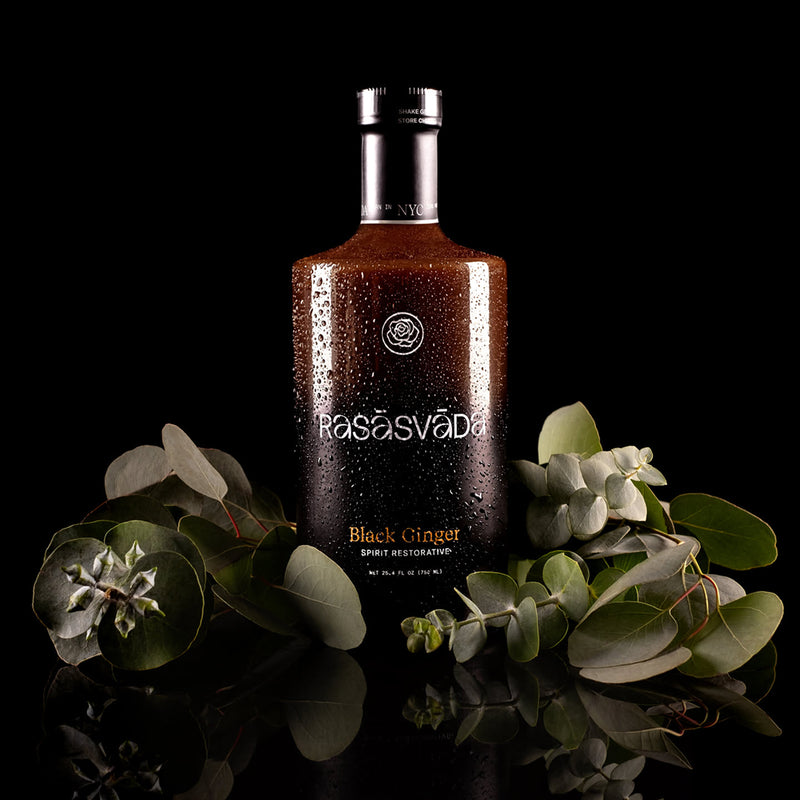
Turkish Rhubarb in Rasāsvāda
- Contributes a grounding, bitter note in Black Ginger
- Supports gut health and overall wellness
- Sourced from: Bulgaria
FAQs
Disclaimer
This content is for educational purposes only and is not intended as medical advice. Consult a qualified healthcare professional before starting any new herbal regimen, especially if you are pregnant, nursing, having existing medical conditions, or taking medication.
100% plants. 0% preservatives.