
When we talk about aging, the conversation often starts with how we look: fewer lines, less gray hair, and a body that still seems youthful. But there is a more important question. Can we reach our seventies, eighties, and beyond with the strength to move confidently, the mental clarity to make our own decisions, and the emotional well-being to enjoy the people and experiences that matter most?
That is the real focus of modern longevity science. The goal is not simply to live as long as possible. It is to stay capable, independent, and engaged for as many of those years as we can, while shortening the period of illness or disability at the end of life.
Getting there takes more than collecting a few healthy habits. It helps to have a plan: picture the life you want in your later decades, understand what could get in the way, and start using proven
strategies early enough to make a difference.
What 'Longevity' Actually Means
Lifespan is the total number of years we live. Healthspan is the number of those years we spend in good physical, cognitive, and emotional health. Someone can live to an advanced age yet spend many of those years limited by heart disease, cancer, dementia, diabetes, frailty, pain, or loss of
independence. Longevity, in the fullest sense, means extending life while staying
healthy.
- Healthspan has three equally important parts:
Physical function: having the strength,
endurance, mobility, and balance to handle daily life without excessive pain or assistance. - Cognitive function: preserving memory, judgment, attention, learning, and the ability to remain mentally independent.
- Emotional health: maintaining strong
relationships and a sense of purpose.
Start With the Life You Want to Preserve
A practical longevity plan starts by working backward from the future. Think about what you want to be able to do in your later years. Maybe that means hiking with family, carrying groceries, climbing stairs, traveling on your own, getting up from the floor, lifting a suitcase,
gardening, cycling, or playing with grandchildren. These are not vague fitness goals. They are real-world abilities your future body will need.
Because strength, aerobic capacity, balance, and muscle mass usually decline with age, you need more reserve today than you hope to have decades from now. That changes the purpose of exercise. You are not training only for appearance or short-term performance; you are building a buffer against future decline.
The same idea applies to cognitive and emotional health. Which relationships do you want to protect? What kind of work, learning, creativity, or service gives your life meaning? What would threaten your
independence? Clear answers make it much easier to decide which habits,
screenings, and interventions deserve your attention.

The Core Longevity Tactics
Tactic 1: Exercise for Future Function
Exercise may be the most powerful widely available tool for protecting both lifespan and healthspan. It supports cardiovascular health, blood sugar control, muscle, bone, cognition, mood, and resistance to frailty. A well-rounded program develops four different abilities.
Stability
Stability is your ability to control your body and avoid falls. It includes balance, posture, coordination, joint control, and efficient movement. It is not the same as strength. A strong person can still move poorly and be prone to injury. Stability gives you the foundation to use your strength and endurance safely.
Strength
Muscle acts like a reserve account for aging. It supports mobility, protects joints and bones, helps the body manage glucose, and provides the force needed for everyday tasks. Strength training should cover major movement patterns, grip, carrying, and the ability to produce and control force. The point is not bodybuilding for its own sake. It is to preserve enough strength and muscle to remain capable as age-related losses add up.
Aerobic Efficiency
Steady aerobic exercise teaches the body to produce energy efficiently over long periods. It supports mitochondrial health, metabolism, and the endurance needed for everyday life. This work should feel sustainable rather than exhausting. Brisk walking, cycling, swimming, rowing, and similar continuous activities can all fit here.
Peak Aerobic Capacity
Higher-intensity exercise trains the upper limit of the cardiovascular system. That reserve matters because aerobic capacity usually falls with age. Short, carefully planned intervals can help preserve your ability to climb, accelerate, recover, and handle demanding physical tasks. Intensity should be added gradually and matched to your current health and athletic capacity.
The best exercise plan includes all four elements and connects them to the life you want to live. Consistency matters more than novelty. Progress should be gradual enough to avoid injury, but challenging enough to keep the body adapting.
Tactic 2: Nutrition That Solves the Right Problem
There is no single longevity diet that works for everyone. A better question is: what problem does nutrition need to solve for you? Some people eat more energy than they use and accumulate visceral fat around their organs. While most of us worry about the fat you can see right under our skin, it is the visceral fat around your organs that is bad for our health. Others, especially as they get older, do not eat enough protein or total food and lose muscle. It is even possible to consume too many calories while still having too little muscle.
A practical nutrition plan should focus on a few measurable goals:
- Maintain or improve insulin sensitivity and blood sugar control.
- Reduce excess visceral fat without sacrificing muscle.
- Eat enough protein and total energy to support muscle, recovery, and activity.
- Choose an eating pattern you can maintain and adjust over time.
Food quality still matters. Minimally processed foods, fiber-rich plants, adequate protein, and unsaturated fats can make it easier to manage appetite and meet your nutritional needs. Polyphenol-rich foods and botanicals add a wide range of plant compounds, but no single ingredient can make up for chronic overeating, too little protein, inactivity, or poor metabolic health.
Fasting, lower-carbohydrate diets, low-fat diets, plant-forward eating, and other approaches can be useful in the right
situation. They are tools, not universal rules. Their value depends on whether
they improve the intended outcome without causing a bigger problem, such as muscle loss, poor nutrition, inadequate recovery, or an eating pattern that is
impossible to sustain.
The best diet is one you can live with over the long term and that reliably supports your metabolic health, body composition, and nutritional needs.

Tactic 3: Sleep as Essential Maintenance
Sleep is not leftover time that can be traded away without consequences. It is an active biological process that supports learning, memory, emotional regulation, immune function, hormones, metabolism, tissue repair, and physical performance.
Even a few nights of poor sleep can affect attention, reaction time, judgment, appetite, and blood sugar control. Ongoing sleep problems are linked with broader cardiovascular, metabolic, cognitive, and mental-health risks. Poor sleep can also make every other longevity habit harder by lowering motivation, increasing cravings, slowing recovery, and making stress more difficult to manage.
Both sleep quantity and sleep quality matter. Helpful basics include a regular schedule, enough time in bed, morning light, consistent physical activity, and a dark, cool, quiet bedroom. Caffeine, alcohol, late meals, travel, stress, pain, medications, sleep apnea, and other medical issues can interfere with sleep and may need more targeted solutions.
Wearable devices can help reveal patterns, but they should not become a source of worry or be treated as diagnostic tools. How you feel and function during the day is still the best measure of sleep quality. Loud snoring, pauses in breathing, severe insomnia, or excessive daytime sleepiness are good reasons to seek professional evaluation.
Tactic 4: Mental and Emotional Health
A longer life is not automatically a happier one. Emotional health helps determine whether those added years feel connected, purposeful, and worth living. It also affects how well we follow through on exercise, nutrition, sleep, and medical care.
Emotional well-being is harder to measure than blood pressure or aerobic fitness, but we can still look at it honestly. Two useful questions are: How do I generally feel? And how do the people closest to me tend to feel when they are around me? The answers may point to chronic distress, unresolved trauma, loneliness, anger, anxiety, or relationship patterns that are reducing quality of life.
The encouraging news is that emotional health does not have to decline with age. It can improve through therapy, mindfulness, close relationships, self-awareness, community service, and deliberate work on communication and coping skills. Social connection is not simply about how many people we know. It is the feeling of trust, mutual support, belonging, and being truly known.
Purpose matters too. Having a reason to get up, contribute, learn, care for others, or create gives structure to healthy behavior and makes healthspan meaningful. Emotional health is not an optional extra in a longevity plan. It is one of the main outcomes we are trying to protect.
Where Ancient Wisdom and Modern Science Converge
Traditional systems such as Ayurveda and Traditional Chinese Medicine have used botanicals and other practices for thousands of years to support vitality and healthy aging.
Turmeric, schisandra, and many other traditional plants reflect an approach that emphasizes prevention, resilience, and maintaining balance before illness develops.
Modern researchers are now studying many of these botanicals for their possible effects on inflammation, oxidative stress, cellular signaling, and mitochondrial function. This work may help explain some traditional uses and may also point to new approaches in preventive health.
Longevity Is a Practice, Not a Destination
Longevity is built through consistency, not perfection. Taking more steps, replacing processed foods, adding strength training, or going to bed 30 minutes earlier instead of scrolling are all practical ways to move in the right direction.
It is also never too late to begin. Some changes can improve sleep, fitness, blood sugar control, strength, or well-being within weeks or months. The larger benefits come from continuing those habits over time.
Rasāsvāda's restorative spirits can be one enjoyable part of that broader practice. Each formula brings together botanicals with long histories of traditional use and growing scientific interest. They are best viewed as a complement to the fundamentals of healthy aging: movement, nourishing food, restorative sleep, emotional well-being, meaningful relationships, and appropriate medical care.
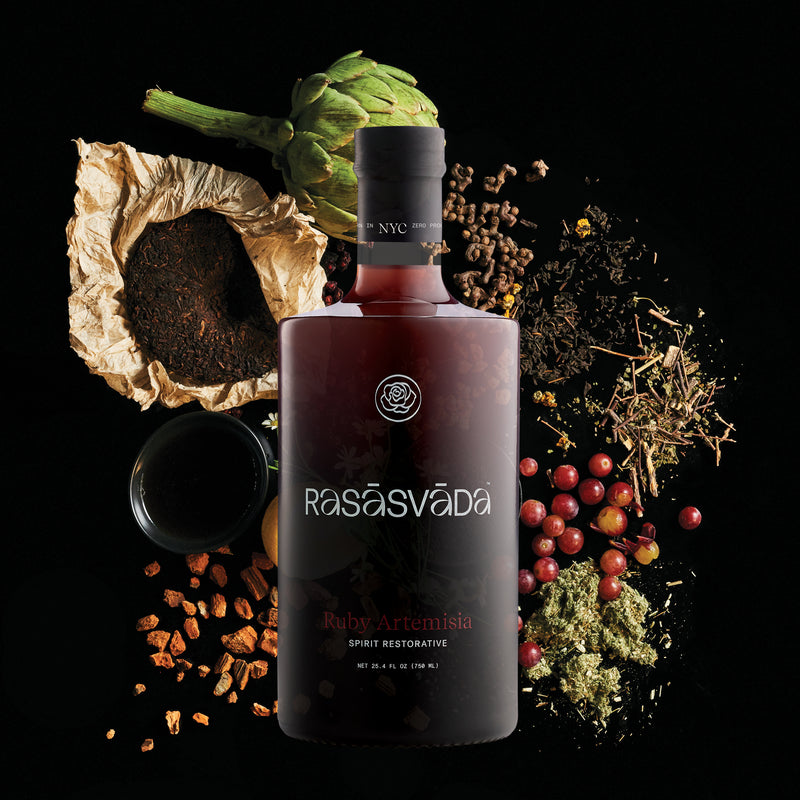
Our #1 Longevity Performer
Rasāsvāda Ruby Artemisia supports:
- Longevity
- Sharper mind
- Healthy gut
Disclaimer
This content is for educational purposes only and is not intended as medical advice. Consult a qualified healthcare professional before starting any new herbal regimen, especially if you are pregnant, nursing, having existing medical conditions, or taking medication.
100% plants. 0% preservatives.
Sources
National Center for Biotechnology Information (NCBI Bookshelf) | Biology of Aging
Social Science & Medicine | Stress and Healthy Longevity: A Scoping Review of the Literature
Aging (Albany NY) | The Hallmarks of Aging
Journal of Nutrition, Health & Aging | Healthy Longevity: The Role of Nutrition, Physical Activity, and Lifestyle Factors
Mechanisms of Ageing and Development | Healthy Longevity: From Molecular Mechanisms to Lifestyle Interventions
Biomedicines | Cellular Senescence and Organismal Ageing in the Absence of p21<sup>CIP1/WAF1</sup> in Klotho-Deficient Mice
International Journal of Wellbeing | The Science of Purpose in Life and Its Relationship to Health and Longevity
The Lancet Healthy Longevity | Longevity Medicine: Bridging the Gap Between Geroscience and Healthy Aging
Frontiers in Aging | Longevity Medicine: Translating Geroscience Into Clinical Practice
PLOS Medicine | Healthy Behaviour and Long-Term Survival in Older Adults
National Institutes of Health (NIH) | Calorie Restriction Improves Immune Function and Health Span
Journal of Internal Medicine | Healthy Longevity: From Molecular Pathways to Clinical Applications