
We’re often quick to blame external factors for the health of our skin— dry weather leads to cracking, and heat and humidity can contribute to acne breakouts. But our skin health can also give us clues as to what is going on inside our bodies— particularly in our gut.
Researchers are studying an important link between gut health and skin health, noting that the health of one system influences the health of the other.
And while Western and traditional medicine are fundamentally different, the connection between systems illuminates one of the guiding principles of Traditional Chinese Medicine (TCM): that the body is a holistic system, not just isolated parts.
Here we’ll explore the link between skin health and gut health through the lens of both TCM and modern science.
What Traditional Chinese Medicine (TCM) Says About Skin and Digestion
In Western medicine, the skin is considered an organ, one of the body's largest. By contrast, in Traditional Chinese Medicine, the skin is part of an organ system (the lung system) and is associated with specific body tissues, emotional states, and activities. Importantly, in TCM, the ‘lung’ doesn’t simply refer to anatomical lungs. It's the body’s source of vitality and an important site for energy exchange.
TCM practitioners may point to lung imbalances as the cause of skin issues such as dryness or rashes. At the same time, other organ systems can influence skin health: the spleen system in TCM, for example, is responsible for nourishing the skin, and a dull complexion may be a symptom of digestive issues. It's also believed that the lung shares a functional relationship with the large intestine, supporting release, elimination, and immune defense.
Traditional Chinese Medicine acknowledges that skin health is reflective of the health of the whole system. So instead of treating dry skin, for example, a TCM practitioner will treat the root cause of the dry skin by assessing the whole individual and often recommending diet and lifestyle changes or a combination of herbs to support harmony.
The Skin-Gut Axis in Modern Research
Seventy years ago, two dermatologists noted an overlap between mood and skin conditions and proposed that the gut microbiome may be one part of the link between the two systems.
Today, the cross-talk between the GI tract and the skin is referred to as the gut-skin axis (GSA), and researchers theorize that this connection is bidirectional; the skin influences the gut and vice versa.
The foundation of this connection is the distinct microbial communities that live in the digestive tract and on the skin. In the digestive tract, microbes help break down food and protect against disease and pathogens. Skin microbes play a similar defensive role, acting as a frontline against harmful bacteria or viruses. Both microbial environments are linked through the immune system, and an imbalance of bacteria in either environment (scientists refer to this as dysbiosis) may contribute to symptoms in the other.
The Role of Inflammation in Both Gut and Skin Health
The microbiomes of the skin and gut don’t talk to each other directly. Rather, they influence one another indirectly through various signaling pathways, including those of the immune system. Microbes in the gut and skin can regulate immune cells, playing an important role in triggering or suppressing systemic inflammation.
A healthy relationship between the microbiome and immune system helps the body respond appropriately to potential threats—launching an immune response when a pathogen is present and stopping the response in the absence of the pathogen. Researchers have noted that dysbiosis of the skin or gut microbiome is linked to chronic systemic inflammation, which can occur when the immune system is overactive.
Persistent or chronic inflammation can contribute to a range of inflammatory and immune-mediated conditions (many of which relate to gut and skin health). Crohn's disease and psoriasis are two examples of conditions in which immune signaling plays an important role. Researchers are investigating how changes in the gut and skin microbiomes may interact with these immune pathways.
Botanicals Traditionally Used to Support Inflammation and Skin Health
Many of the skin-supporting and digestive herbs used in TCM contain anti-inflammatory properties and aim to restore harmony within the body. In TCM, herbs are rarely used individually. Most TCM tinctures contain a mixture of 2-14 herbs as practitioners believe herbs work synergistically together.
Rose petals
This ancient botanical is used in traditional medicine to treat digestive ailments, pain, and health conditions caused by chronic inflammation. Rose petals are known for containing ellagitannins-- a type of antioxidant that has anti-inflammatory properties and can protect against oxidative stress. Rose petal extracts are also often used in cosmetics for their skin-soothing properties.
Red wine grape skins
In TCM, grapes are said to have a “cooling” nature, and they’re often applied to clear heat and calm inflammation. Researchers have identified several compounds in grape wine skins specifically that are responsible for many of the botanical's inflammation-balancing effects, including resveratrol, quercetin, and anthocyanins. Many of these polyphenols are also used in topical skin ointments to support anti-aging and other skin ailments.
Wormwood
Wormwood is used in traditional medicine as a topical skin ointment linked with clearer skin and anti-aging effects. It contains sesquiterpene lactones (SLs), unique plant compounds that have demonstrated anti-inflammatory activity in some lab studies.
Artichoke leaf
Researchers found that artichoke leaf may help balance inflammation in the skin, according to one study. Participants who took an artichoke leaf supplement self-reported an improvement in skin appearance, and scientists noted a greater decrease in inflammatory markers compared to those who didn’t take the supplement. This is only one small study, and future studies are needed for scientists to draw conclusions about the effects of artichoke leaf.
Simple, Sustainable Habits to Support the Gut-Skin Connection
There are no quick fixes when it comes to supporting your skin and gut. But the good news is small, simple changes and consistency can support your goals long-term. Here are a few top tips for skin and gut health.
- Eat an antioxidant-rich diet containing a variety of fruits and vegetables. In one small pilot study, healthy postmenopausal women who ate a daily portion of 85 g of ataulfo mango over the course of 16 weeks experienced a reduction in certain measures of facial wrinkles. Importantly, the group who consumed 250 g daily saw an increase in several wrinkle measures. Since the study was small and conducted on a specific population, more research is needed to determine exactly how mango or other antioxidant-rich fruits may affect skin health.
- Incorporate gut-healthy probiotics and prebiotics into your routine. Keep in mind that different probiotic strains and prebiotic fibers can have different effects, so what works for one person may not work for another.
- Limit alcohol and high-sugar foods, as these can influence gut health and inflammatory pathways, although individual response will vary. Rasāsvāda’s restorative spirits are zero-proof with 1g of sugar. Each one contains a blend of time-honored botanicals for balanced wellness support.
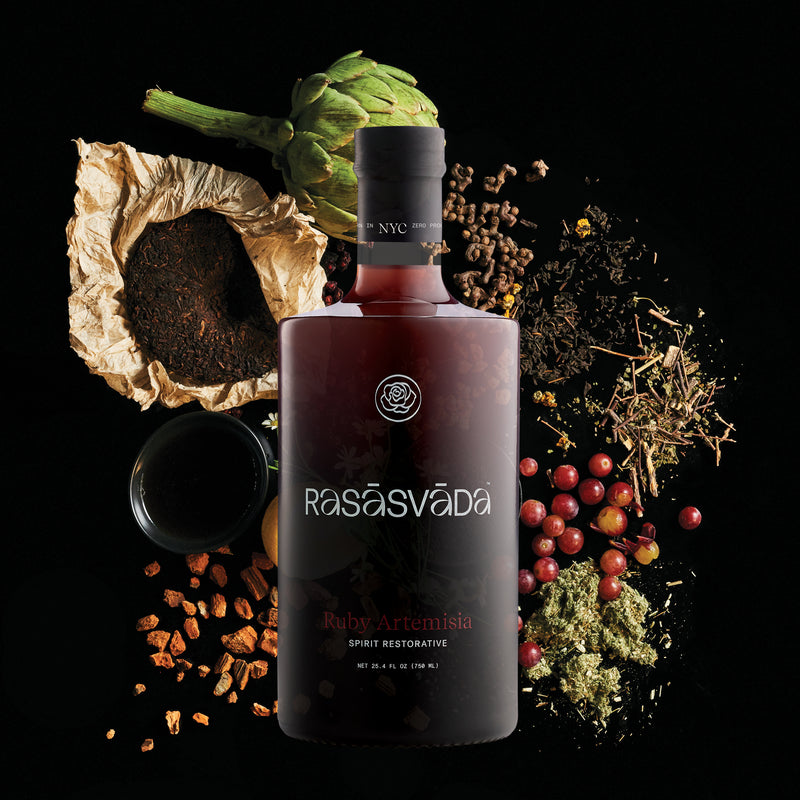
Support Your Gut and Skin Health with Ruby Artemisia
Ruby Artemisia is a restorative beverage crafted with over 15 beneficial botanicals. It is bright, tart, and slightly sweet, and can be sipped neat or blended into your favorite wellness drink.
- Antioxidant-rich maqui berry and red wine grape skins
- Gut-healthy bitters like artichoke leaf
FAQs
Disclaimer
This content is for educational purposes only and is not intended as medical advice. Consult a qualified healthcare professional before starting any new herbal regimen, especially if you are pregnant, nursing, having existing medical conditions, or taking medication.
100% plants. 0% preservatives.