
At first glance, chicory root may not seem like an ancient healer. But this roadside root, as prolific as the dandelion, wasn’t always as widespread, and it has an interesting and rich history in traditional medicine and cuisine.
Traditional healers recognize chicory root, a plant rich in inulin fiber, for its digestive and liver-supporting benefits, using it to promote detoxification and digestive comfort.
Because of its unique benefits and deep, earthy flavor, chicory root is a foundational ingredient in Rasāsvāda’s Black Ginger, a restorative spirit crafted to support recovery, detoxification, and to balance inflammation.
Read on to explore the history of chicory root and the key health benefits behind this time-honored botanical.
Botanical Overview

- Botanical names: Cichorium intybus
- Family: Asteraceae (the daisy family)
- Common names: Chicory, Common chicory, Blue sailors
- Location: Native to Europe and Western Asia; now widely naturalized in North America, Australia, and other temperate regions. Commonly found along roadsides, fields, and pastures.
What is Chicory Root?
Chicory root comes from the chicory plant, a bright blue flowering plant that is part of the daisy family. It was originally cultivated in Egypt, but now grows all over the world. They’re incredibly hardy plants and can grow almost anywhere. You’ve likely even seen them flowering on the roadside. But just because this plant has become abundant doesn’t mean its health benefits are any less precious. Chicory root is rich in inulin, a prebiotic fiber that is responsible for many of the root's health benefits.

History of Chicory Root
Chicory root was first cultivated in Egypt, but it became important in other corners of the world too, including India and France. As its medicinal and culinary popularity grew, chicory root eventually spread to other parts of Europe and to North America, with France becoming one of the largest exporters.
As chicory root made its way across the globe, its traditions and uses evolved with it.
- In Egypt, the root of the bright-blue flowered plant was used in traditional medicine to treat jaundice, while the juice was used for treating tumors and even malaria.
- In India, the seeds are used to treat liver diseases, and in ancient Europe, chicory was used to relieve digestive disorders like bloating, gas, and sluggish digestion.
- In France, chicory root had an important culinary use. In the early 1800s, when coffee beans were hard to come by, chicory root was a popular coffee substitute, though chicory doesn’t contain caffeine. The roots, when roasted and ground, have a similar flavor to coffee and could be used to stretch the coffee beans further.
These practices were later adapted in America during the Revolution and the Great Depression. In New Orleans, the chicory coffee trend stuck around. At cafes today you’ll still be able to get a cup of chicory cafe au lait, a chicory coffee with hot milk.
The Health Benefits of Chicory Root
Chicory root is most known for being rich in inulin, a prebiotic fiber with digestive benefits, but chicory is also rich in antioxidants and other compounds that contribute to its myriad of health benefits.
1. Promotes a Healthy Gut Microbiome
Chicory root is a rich source of inulin, a type of prebiotic fiber. Inulin and other types of prebiotic fibers act like food for the good bacteria in your gut. When inulin reaches the large intestines, it breaks down into another compound called short-chain fatty acids (SCFA), which have positive health effects that researchers are just beginning to understand. These positive health effects include better gut health, immune function, blood sugar regulation, and even lower disease risk.
Though inulin is found in other foods like barley, oats, garlic, and leeks, chicory root is one of the best sources.
2. Supports Regularity
For those who struggle with occasional constipation, chicory root may provide welcome relief. The inulin in chicory root has been found to help soften stools and promote bowel movements. Chicory root is most commonly offered in a powder form, but the liquid extracts of chicory root can provide a source of inulin as well. It's important to note that too much chicory root can cause stomach upset, gas pains, and diarrhea. For this reason, it's recommended to try small amounts first.
3. Offers Blood Sugar Support
Chicory root may help play a role in blood sugar regulation thanks to two compounds present in the plant called caffeic and chlorogenic acids. These antioxidants are found in various parts of the chicory plant, including the seeds, roots, and leaves.
Scientists have found that this antioxidant duo promotes the secretion of insulin as well as encourages muscles to take up glucose, removing it from the bloodstream and preventing blood sugar “spikes” that can wreak havoc on our health over time.
Early rat studies have confirmed that chicory plant extracts positively impact blood sugar and triglyceride levels. Human studies are in the works and will give scientists more clues as to whether or not chicory root could become a valuable tool for blood sugar management.
4. Aids in Liver Health
Chicory root is often used in traditional medicine to treat liver problems based on the belief that chicory root has detoxifying effects. So far, results from recent research studies have been mixed, with some studies showing beneficial effects on liver enzymes while others finding no or only minimal effects.
Liver enzymes are just one piece of the puzzle, though. Scientists have also studied the effects of chicory roots on fat digestion, specifically cholesterol and triglycerides. High levels of either of these compounds can harm the liver. One study found that chicory seed and turmeric supplementation had a positive impact on triglyceride levels, while another animal study found that a chicory plant-rich diet lowered cholesterol levels in rats.
Again, animal studies are only the beginning, and human studies are needed to confirm the impact of chicory root on liver health.
Chicory Root in Rasāsvāda
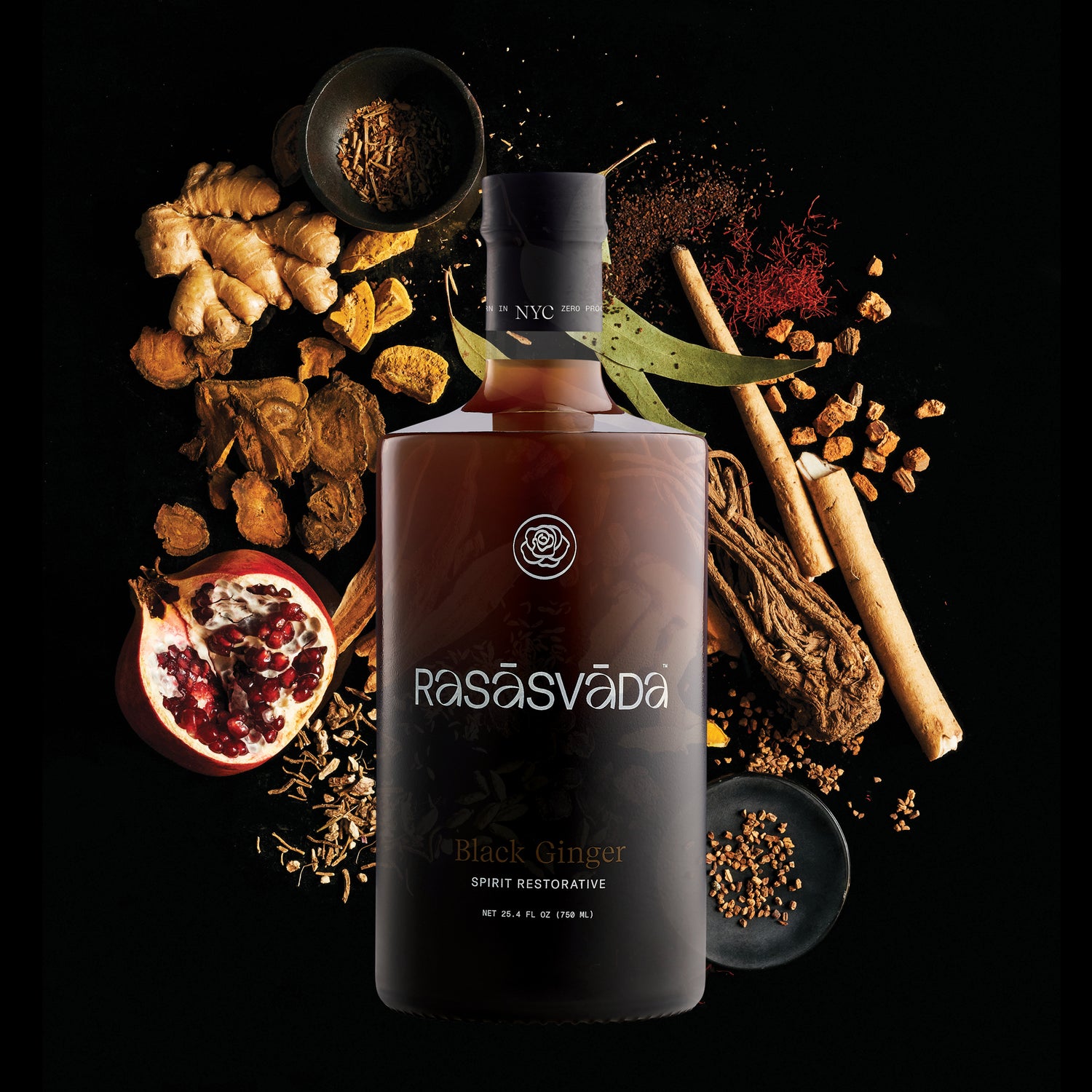
Chicory root is a key ingredient in Black Ginger, a restorative beverage formulated to support recovery, detoxification, and inflammation. The nutty and slightly bitter flavor of chicory root is balanced alongside other functional botanicals like burdock root, black ginger, and ancient mushrooms.
Black ginger is the most intense and bitter of the Rasāsvāda’s spirit restoratives. We recommend enjoying it as an alcohol free nightcap. Sip it slowly and let the bold flavors bring your mind and body back into the present moment.
Flavor profile: Chicory root is nutty, slightly bitter, and earthy.
Sourced from: Morocco
How to use: Black Ginger can be enjoyed neat, mixed with sparkling water or blended into your daily drink like a wellness tonic, smoothie, or cocktail.
Key Takeaways
Chicory root, from the Cichorium intybus plant, has been used for centuries in traditional Egyptian, Indian, and European medicine for its grounding and restorative properties. Rich in inulin, a prebiotic fiber known to support gut health, and other antioxidants, chicory root helps support regular digestion and gut health, and promotes healthy blood sugar levels and liver health. Its earthy, nutty flavor has also made it a historic coffee alternative in some cultures.
FAQs
100% plants. 0% preservatives.
Sources
Nutrición Hospitalaria | Effectiveness of Inulin Intake on Indicators of Chronic Constipation: A Meta-Analysis of Controlled Randomized Clinical Trials
Journal of Pharmacology | Chicory (Cichorium intybus) Herb: Chemical Composition, Pharmacology, Nutritional and Health Applications
Smithsonian Magazine | The History of the Chicory Coffee Mix That New Orleans Made Its Own
Molecules | The Common Chicory (Cichorium intybus L.) as a Source of Extracts With Health-Promoting Properties — A Review
Foods | Health Benefits and Side Effects of Short-Chain Fatty Acids