
Turmeric is a rhizome (an underground stem) known for its golden-yellow color and earthy flavor.
If you’re not familiar with turmeric, you may be familiar with curcumin, the main medicinal compound in turmeric, often sold as a powdered supplement.
Curcumin and turmeric are often used to support joint health and mood and to balance inflammation. These modern uses are drawn from the rhizome's roots in Eastern medicine, where it has been used for over 4,000 years for a range of health conditions, from skin to lung health.
At Rasāsvāda, turmeric brings an earthy flavor and unique health benefits to Black Ginger, a restorative spirit that contains 18 beneficial botanicals.
Here we’ll discuss the history and traditional uses of turmeric and explore its modern resurgence, including the latest research on turmeric's key health benefits.
Key Takeaways
Turmeric is a rhizome native to South Asia, where it has long been treasured for its golden yellow color and medicinal benefits. In Eastern medicine, turmeric is used to support digestion, circulation, skin health, and overall vitality. Recent research is examining these traditions more deeply, suggesting that turmeric may support balanced inflammation, cognitive function, mood, joint comfort, and heart health. While more human studies are needed for scientists to understand its full potential, turmeric remains one of the most respected botanicals for its broad wellness applications and deep cultural symbolism.
What is Turmeric Root?
Turmeric looks like a root, but it's actually a rhizome—a distinction that becomes important when talking about turmeric's nutrient content. Because while roots suck up nutrients, rhizomes, which are like underground stems, store them. This storage function is the reason why turmeric is rich in nutrients and plant compounds that are known to benefit human health. While there are many beneficial compounds in turmeric, curcumin is the most notable and is responsible for many of the health benefits of turmeric as well as its signature golden yellow color.
Turmeric is native to India but grows in Southeast Asia. It grows across the globe but requires hot and humid climates to thrive.

The Health Benefits of Turmeric and Curcumin
While turmeric contains a variety of antioxidants and beneficial compounds like turmerone oil and curcuminoids, curcumin, a specific type of curcuminoid, is considered the most potent and widely studied. Below, we explore the health benefits of this powerful compound.
1. Powerful Antioxidant
Turmeric’s most vital compound, curcumin, is responsible for most of its antioxidant power. Antioxidants are compounds that neutralize the body’s free radicals, naturally occurring chemical compounds that can be harmful in large amounts, causing disease and premature aging.
Importantly, antioxidants don’t work alone. They work in a chain, passing down free electrons and acting like an off-switch for damaging oxygen radicals.
Some antioxidants are enzymes; these are important parts of the antioxidant system because they don’t just neutralize one electron at a time, they can act on thousands.
Curcumin can help increase levels of enzyme antioxidants, making it an especially potent antioxidant.
2. Supports Cognitive Health
Turmeric may have neuroprotective effects, potentially benefiting those with certain health conditions and even supporting the brain power of healthy adults.
Scientists suspect that turmeric works by helping prevent healthy brain cells from dying, by protecting cells from oxidative damage and inflammation, and by supporting the brains plasticity, that is, its ability to weave new neuronal pathways, a process that tends to slow as we age.
Given all the ways turmeric can support the brain, it's become particularly interesting to researchers who are developing new methods for treating brain injuries and neurodegenerative conditions.
But tumerics' potential doesn’t stop there. It may also help improve working memory and processing speed in healthy adults. Meaning it could possibly function as a cognitive enhancer.
The research is still fresh, though; more human studies and clinical trials are needed to confirm turmeric’s potential.
3. Anti-inflammatory Properties
Inflammation can be beneficial, such as when your body is fighting an infection or virus. But chronic, or long-term, inflammation can lead to certain health conditions like heart disease or diabetes.
According to some researchers, turmeric may help reduce chronic inflammation, both in healthy people and in those with health conditions.
The immune system is controlled by a network of immune cells and signaling proteins called cytokines. Researchers have found that curcumin, the main compound in turmeric, acts on a cytokine called TNF-α. In a healthy person, TNF-α can help fight off infections. But in excess, TNF-α can lead to chronic illness. Curcumin may help keep TNF-α in check, supporting overall well-being and longevity.
Turmeric may act on other inflammatory pathways as well. Future research will help scientists understand turmeric's full potential.
4. Supports Mood
From neurotransmitters to hormones, there are a lot of factors that influence our mood. Turmeric may play a helpful role when it comes to emotional well-being.
Researchers hypothesize that turmeric acts on hormones like estrogen and cortisol and neurotransmitters like serotonin and dopamine, important regulators of mood. Right now, turmeric has been studied for PMS and mood disorders like depression and anxiety, showing that it may be beneficial and has minimal side effects.
More studies will need to be conducted in humans for scientists to make a call as to whether turmeric is a good option for those struggling with mood regulation.
5. Aids in Joint Health
Occasional aches and pains are common, especially as we age. Because turmeric helps ease inflammation associated with pain and injury, scientists theorize that it may be helpful for soothing pain. This theory may hold up in practice according to some studies that looked at the effect of curcumin on knee pain and arthritis pain, as well as certain inflammatory markers that are often increased during acute injury.
Researchers will need to conduct more studies to figure out the most effective dose and delivery system for curcumin.
6. Promotes Heart Health
Cholesterol plays an important role in heart health, as higher LDL (bad cholesterol) is associated with a higher risk of heart disease. Curcumin might help manage bad cholesterol levels.
One study found that when participants took curcumin for one week, they had higher HDL (good cholesterol) and lower total cholesterol.
The study was small, with only 10 participants, so scientists are cautious about the findings. But still, these results are promising and may lead to larger, more rigorous studies in the future.

History & Traditional Uses of Turmeric Root
While turmeric may have had a recent resurgence— you’ll find turmeric supplements and even most grocery stores carry fresh turmeric root, its health benefits and culinary uses have been around for over 4,000 years.
The use of turmeric as medicine was first documented in India, where it is used in Ayurvedic medicine to treat congestion, skin conditions, vitality and more. Ayurvedic literature has over 100 different terms for turmeric, which gives you an idea of just how pervasive this medicinal rhizome is.
It's typical for medicinal foods to also have cultural or culinary significance, and turmeric is no exception. In Hinduism, turmeric is considered sacred, symbolizing fertility and good luck. It’s used in traditional Hindu weddings where the groom will tie a string dipped in turmeric paste around the bride's neck, symbolizing prosperity and cleansing. In some parts of southern India, turmeric is used as an amulet to ward off evil spirits (much like garlic). The yellow color of turmeric makes it popular for dying clothes and for body paint, and it was even historically used to create the yellow hue of Buddhist robes.
Its popularity in India means it spread quickly to other countries. It made its way along trade routes reaching China, Africa, and Jamaica. It’s been adapted in all facets of Asian medicine, including Unani medicine, Traditional Chinese Medicine, Ayurvedic, and Siddha.
A Note about Bioavailability
Bioavailability refers to how well absorbed a certain compound is. Compounds with higher bioavailability are better absorbed than compounds with lower bioavailability. Curcumin is known for having poor bioavailability, and scientists are still figuring out the best way to improve absorption. Curcumin or turmeric is often paired with black pepper to enhance absorption. While curcumin has many potential health benefits, researchers are still determining the most effective way to replicate these benefits in humans by improving curcumin absorption in the body.
Botanical Overview

Botanical Name: Curcuma longa L.
Family: Zingiberaceae (ginger family)
Common Names: Turmeric, Indian saffron, yellow ginger, haldi
Location:Native to South Asia, particularly India; widely cultivated in tropical and subtropical regions including Southeast Asia, China, Sri Lanka, and parts of Africa and the Caribbean.
Turmeric in Rasāsvāda
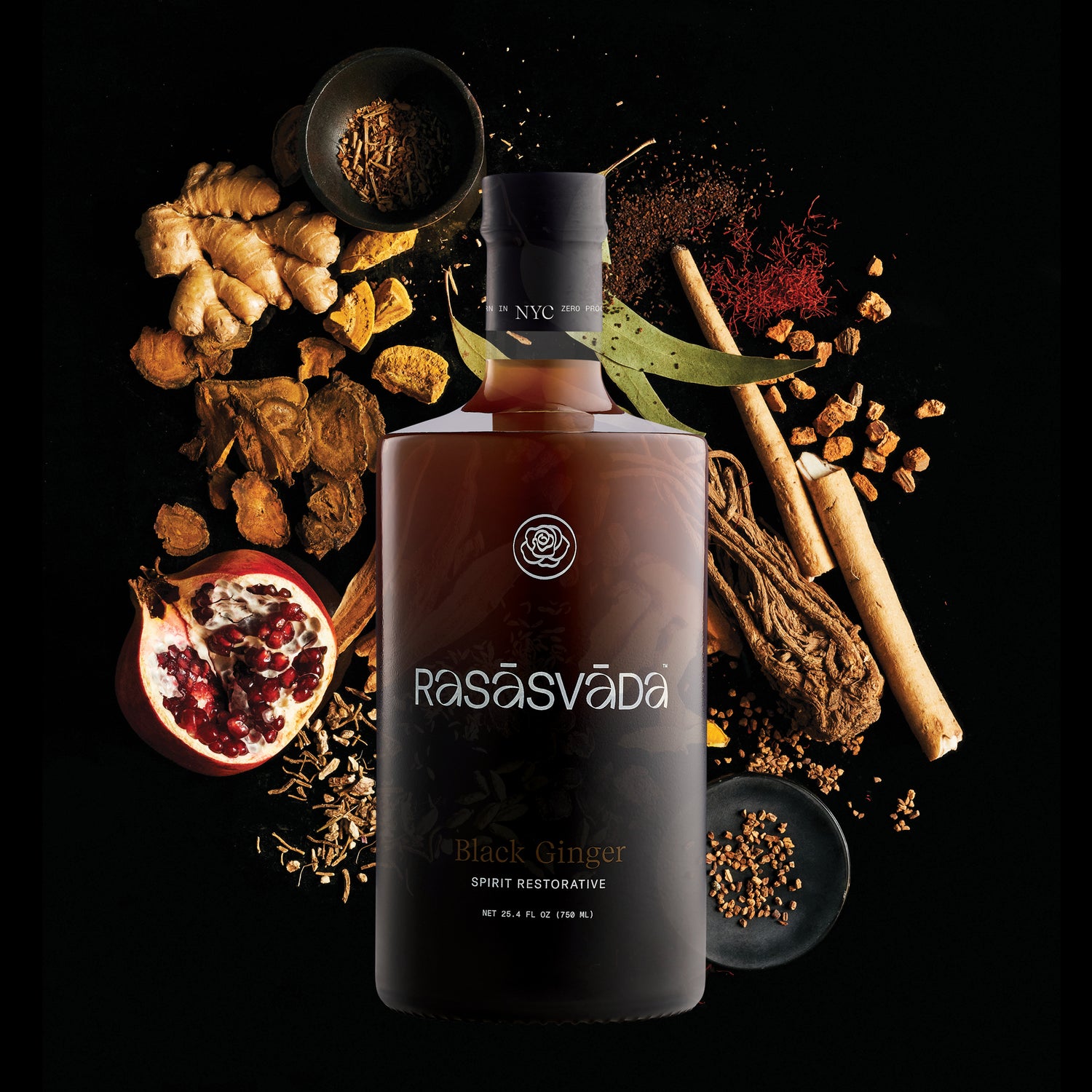
Turmeric is one of the key functional ingredients in Black Ginger, a restorative spirit that supports balanced inflammation, recovery, gut health, libido, and detoxification. In addition to turmeric, Black Ginger features other potent botanicals like black ginger, burdock root, cardamom, and reishi mushroom. It has a signature earthy bitterness along with a warming spice and toasty depth.
Taste: Earthy, warm, and slightly bitter
How to use: Mix it into hot or sparkling water, sip it neat, or blend it into your daily drink like a wellness tonic, smoothie, or cocktail.
Sourced from: Nicaragua
FAQs
100% plants. 0% preservatives.
Sources
NCBI Bookshelf | Turmeric, the Golden Spice — From Traditional Medicine to Modern Medicine
Current Rheumatology Reports | Efficacy and Safety of Turmeric Extracts for the Treatment of Knee Osteoarthritis: a Systematic Review and Meta-analysis of Randomized Controlled Trials
Frontiers in Immunology | Curcumin, an Active Component of Turmeric: Biological Activities, Nutritional Aspects, Immunological, Bioavailability, and Human Health Benefits — A Comprehensive Review
Nutrients | Is Curcumin Intake Really Effective for Chronic Inflammatory Metabolic Disease? A Review of Meta-Analyses of Randomized Controlled Trials
Science of the Total Environment | Targeting Cognitive Aging with Curcumin Supplementation: A Systematic Review and Meta-analysis