
There was a time when finding an orange in the toe of your Christmas stocking was a genuinely exciting surprise. Not a chocolate bar or a new toy, but a single piece of bright, fragrant fruit.
In the 1994 film Little Women, Amy March carefully places an orange on a small round of bread. It's a fleeting image, but a telling one: the orange is treated almost like a treasure, something beautiful enough to display before it's eaten. There's something equally charming about the traditional Christmas stocking, where a single orange fills out the toe with its round, satisfying shape.

Today, oranges are pretty ordinary, so we barely think twice about them. They fill grocery-store displays year-round and sit in fruit bowls without much fanfare. But for generations, particularly in colder parts of Europe and North America, citrus was a seasonal luxury: colorful, fragrant, and precious precisely because it was so difficult to bring home.
The story of the humble stocking orange reveals a fascinating intersection of geography, trade, traditional medicine, and holiday ritual. Citrus fruits weren’t just a sweet treat. It was a reminder of warmer places, a source of nourishment, and a small gift that carried a surprising amount of meaning.
Key Takeaways
- The Christmas orange carries a history of generosity. Often associated with the legend of St. Nicholas, the orange became a symbol of abundance, good fortune, and thoughtful giving.
- Citrus has a long history from sailors relying on citrus to prevent scurvy to Traditional Chinese Medicine's use of dried tangerine peel. The fruits were valued for both flavor and practical applications.
- A familiar fruit can hold centuries of history. Today's everyday orange is a reminder of how trade, agriculture, and cultural traditions shape the foods we enjoy.
The Geography Problem: Why Winter Citrus Was So Special
Citrus trees thrive in warm, subtropical and Mediterranean climates. Oranges, lemons, and mandarins have been cultivated across parts of Asia, North Africa, and the Mediterranean for centuries, but they don't naturally flourish through the cold winters of northern Europe or much of North America.
For people living in colder regions, fresh citrus had to travel—and that journey came at a cost.
Before modern transportation and reliable storage, moving fresh fruit over long distances was expensive and risky. Oranges could spoil in transit, and the cost of shipping made them inaccessible to many households. Citrus was available in some northern European markets as early as the 16th century, but it remained a specialty import rather than an everyday grocery item.
That began to change during the 19th century. Expanding commercial cultivation, railways, steamships, and improved freight systems made it increasingly practical to move citrus from growing regions to distant markets. In the United States, rail transport helped bring California oranges eastward in much greater quantities.
A winter orange was once a small logistical achievement. Its rarity wasn't just sentimental; it reflected the real difficulty of bringing a fruit grown in a warm climate to a cold-weather household.
Citrus as Winter Medicine, Not Just a Treat
Long before anyone understood vitamin C, people had observed that fresh citrus could make a difference to health.
One of the best-known examples comes from the history of scurvy, a disease that devastated sailors on long voyages when their diets lacked fresh fruits and vegetables. In 1747, British naval surgeon James Lind conducted an experiment aboard the HMS Salisbury. Of the treatments he tested, oranges and lemons produced the most striking improvement among the sailors who received them.
Lind didn't understand the nutritional mechanism behind the results. Vitamin C wouldn't be isolated until the 20th century, and its role in preventing scurvy was established later. But the practical value of citrus had been recognized through experience long before scientists identified the compound responsible.
Citrus has another long-standing relationship with winter wellness through its peel. In Traditional Chinese Medicine (TCM), dried tangerine peel is known as chen pi (陈皮). Rather than being discarded, the peel is carefully dried and, in some traditions, aged for years before use.
Chen pi is traditionally classified as warm and aromatic. It is used to regulate the movement of qi, particularly in relation to digestive function, and has traditionally been included in formulas intended to support digestive ease.
It's a different way of thinking about citrus: not just the juicy fruit, but the aromatic, slightly bitter peel as a valuable botanical ingredient in its own right.
How a Luxury Became a Stocking Stuffer
So how did an imported winter luxury become one of the most recognizable Christmas stocking traditions?
One popular explanation connects the orange to the legend of Saint Nicholas and three poor sisters. According to the story, Nicholas secretly gave the sisters gifts of gold to help them secure their futures. In some versions, the gold landed in stockings or shoes left near the fire to dry.
The orange's golden color and round shape made it a natural symbolic stand-in for those gifts. Its relative rarity made it feel special enough to belong in a holiday stocking.
The exact origin of the modern stocking-orange custom is difficult to establish, so the Saint Nicholas connection is best understood as a popular explanation rather than a documented historical fact.
As transportation improved and citrus became more accessible, the fruit gradually lost its luxury status. But the orange stayed in the stocking. A gift that once reflected genuine scarcity became a sentimental gesture, passed from one generation to the next.
It's a lovely example of how traditions outlive the circumstances that created them. We keep the ritual, even after we've forgotten the original reason for it.
Citrus in Rasāsvāda's Rose Bergamot
Citrus has a remarkable ability to bring brightness and complexity to botanical blends. Its aromatic peels offer a spectrum of flavors and fragrances, from the delicate floral notes of bergamot to the lively tartness of lemon and lime. Across culinary, herbal, and perfumery traditions, citrus has been prized for centuries for its distinctive aroma and versatility.
In Rasāsvāda's Rose Bergamot, citrus takes center stage through a thoughtfully layered combination of botanicals:
- Yuzu peel, lemon, grapefruit peel, lime peel, and orange peel contribute bright, aromatic citrus character, while steam-distilled bergamot essential oil adds its signature floral, bittersweet fragrance. Rose petals and steam-distilled rose geranium essential oil bring a soft botanical dimension, creating a beautifully balanced aromatic profile.
- The blend also brings together distinctive botanicals like schisandra berry, white ginseng, quince, hibiscus, and lemongrass, adding further depth and complexity.
- Together, these ingredients make Rose Bergamot an invitation to explore the many expressions of citrus while enjoying a more intentional botanical drinking ritual.
Much like the orange tucked into a Christmas stocking generations ago, Rose Bergamot celebrates the beauty of botanicals and the pleasure of savoring something special. It's a reminder that even familiar ingredients can have extraordinary stories—and that a little brightness can make an everyday moment feel like a celebration.

What This Means for How We Enjoy Citrus Today
Citrus may no longer be a rare winter arrival, but not every variety has become an everyday commodity.
Bergamot, for example, is grown primarily in Calabria, southern Italy, and this distinctive citrus is prized for its aromatic peel and the essential oil used in perfumery and Earl Grey tea. Its fragrance is complex (bright, floral, green, and gently bitter) and its concentrated growing region gives it a specialty status that familiar oranges and lemons no longer have.
That distinctive character is part of what makes bergamot such an interesting botanical ingredient. In Rasasvada's Rose Bergamot, citrus notes meet the softer floral character of rose, creating a combination that feels less like an everyday refreshment and more like an invitation to slow down.
There's something fitting about bringing citrus into a winter ritual. For centuries, its arrival in colder months represented a connection to warmth, color, and abundance. Today, we can enjoy those same sensory qualities without waiting for a precious shipment to arrive.
The next time you reach for an orange, consider the journey it took to get there. Sometimes the most ordinary things carry the most history.
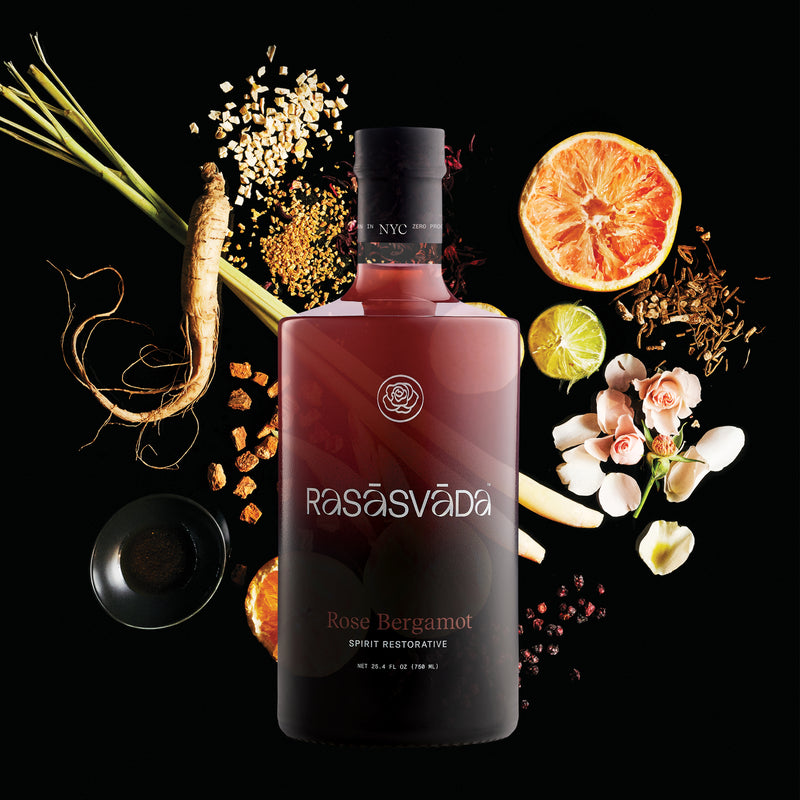
A Celebration of Citrus, Past and Present
Experience the bright, aromatic flavors of citrus with Rasāsvāda's Rose Bergamot, a floral botanical blend inspired by centuries of herbal tradition.
- Bergamot, yuzu, grapefruit, and citrus peels meet delicate rose petals for a refreshing, bittersweet flavor.
- Features white ginseng and schisandra berry, botanicals traditionally used to support vitality, balance, and overall well-being.
- Enjoy chilled over ice, topped with sparkling water, or mixed into a refreshing alcohol-free spritz.
FAQs
Disclaimer
This content is for educational purposes only and is not intended as medical advice. Consult a qualified healthcare professional before starting any new herbal regimen, especially if you are pregnant, nursing, having existing medical conditions, or taking medication.
100% plants. 0% preservatives.
Sources
The Citrus Trade in Britain, 1500–1914 ·
USDA: Technological and Logistical Developments in Shipping
The Discovery of Vitamin C — PubMed ·
Scurvy: Reemergence of Nutritional Deficiencies — PMC ·
Chenpi: Botany, Ethnopharmacology, Phytochemistry, and Pharmacology — PubMed
Smithsonian Magazine: Why We Should Bring Back the Tradition of the Christmas Orange ·
USC Digital Folklore Archives: An Orange in Your Christmas Stocking