
If you’ve ever had a sleepless night or even a whole stretch of sleepless nights, you know firsthand how much sleep impacts waking hours, influencing everything from mood to metabolism.
And while some of the effects of poor sleep quality are obvious (like low mood or poor cognitive function), some are less so— like increased cellular stress.
Here we’ll discuss some of the hidden functions of sleep, like balancing inflammation and oxidative stress. And we’ll explore how these functions contribute to our overall health, wellbeing and longevity. Lastly, we’ll explain the research behind some calming botanicals that are often used to support sleep.
Key Takeaways
- Quality sleep is vital for overall health, specifically disease risk, longevity, and cognitive health
- Key herbs that support rest include: schisandra berry, Angelica Archangelica, saffron, rose petals, and hibiscus
- Rasāsvāda restorative beverages Rose Bergamot and Black Ginger contain calming botanicals and make the perfect alcohol free nightcap or evening restorative
Why Sleep Matters for Longevity and Inflammation
Traditional and modern practitioners will agree that quality sleep is one of the cornerstones of health. It's essential for muscle repair, cellular renewal, memory consolidation, hormonal balance, immune functioning, and more.
Importantly, poor sleep is associated with increased risk of disease and decreased longevity. So what is happening during rest that makes sleep so vital for our long-term health?
Lowering oxidative stress
The answer lies in an important process called redox balancing. During waking hours, our bodies build up free radicals— necessary but potentially harmful compounds that can form from processes like metabolizing food or come from outside sources like air pollution. During sleep, our bodies work overtime to clear these potentially damaging compounds by sending out antioxidant enzymes.
This clearing of free radicals is called redox balancing. Much like a Zamboni smooths ice in between hockey halves, antioxidant enzymes neutralize free radicals and restore a healthy ratio of antioxidants to free radicals.
Where sleep is associated with balanced oxidative stress, sleep deprivation is linked to an increase in oxidative stress.
The link between oxidative stress and inflammation
Higher levels of oxidative stress can trigger chronic inflammation, and researchers believe this could be one reason why poor sleep quality increases the risk of neurodegenerative disorders, heart disease, and other metabolic conditions.
At the same time, potentially independent of oxidative stress, inflammatory markers are increased after multiple nights of sleep deprivation.
5 Herbs That Support Rest
Modern herbalism and traditional medicine view sleep as vital for restoring balance within the body. In fact, herbs are often classified by their ability to calm the nervous system and promote a restful state— adaptogens and nervines are examples of categories of restorative herbs.
Here we’ll discuss some key herbs that promote calm and are featured in recent research and ancient medicinal practices.

1. Schisandra Berry
This purple red berry that’s native to parts of Korea and China has calming properties that make it highly regarded in herbalism and Traditional Chinese Medicine (TCM). It's often used by traditional practitioners for treating anxiety, irritability, chronic stress, and trouble sleeping, specifically for trouble sleeping caused by bad dreams.
Scientists attribute the berries' relaxation properties to a phytochemical called lignans, which seem to impact the central nervous system.
A study conducted on rats found that schisandra berry increased GABA, a neurotransmitter that switches on the parasympathetic (rest-and-digest) nervous system. Another animal study found that schisandra berry increased the amount of time mice stayed asleep and decreased the time it took mice to fall asleep. The next step will be to study how these effects translate to humans.
Schisandra berry brings its balancing qualities to both Rose Bergamot and Ruby Artemisia.

2. Angelica Archangelica
Angelica archangelica is a tall, stalky plant that’s native to northern Europe. It looks like a large dandelion, but instead of white fluffy seeds, Angelica archangelica boasts clusters of green and white flowers. In herbalism, this fast-growing plant is considered a nervine and is traditionally used to calm the central nervous system.
Angelica archangelica is rich in polyphenols called coumarins, compounds that are thought to turn off the enzyme responsible for breaking down GABA, according to studies. So far, two rat studies have demonstrated that Angelica archangelica may be effective for reducing anxiety, a common cause of poor sleep. Researchers will likely conduct further studies to see how these results translate to humans.
At Rasāsvāda, angelica archangelica appears in both Black Ginger and Rose Bergamot.

3. Saffron
Rest may not be the first thing we associate with this bold, golden-colored spice, but scientists are finding that saffron may help promote better sleep. Saffron is high in a compound called crocin, which is thought to support sleep by elevating levels of melatonin and affecting mood-altering neurotransmitters like serotonin and GABA. Several studies concluded that when compared to a placebo, saffron can be beneficial for sleep quality and sleep duration.
One such study was a clinical trial that examined the effects of saffron supplementation in 66 participants over 6 weeks. At the end of the study, participants who took saffron reported an improvement in the “ease of falling asleep” as well as an increase in their emotional limitation, or their capacity to process or handle feelings.
Other studies have also noted that saffron is associated with mood benefits, potentially easing feelings of anxiety or depression, which are closely linked to sleep quality.
Saffron is one of the restorative botanicals found in Black Ginger.

4. Rose Petals
Rose petals aren’t just a symbol of beauty; they’ve long been regarded in traditional medicine for their calming properties among other benefits. In Ayurvedic medicine, for example, Rosa damascena is considered a cooling agent that balances Pitta dosha. It’s often recommended for quieting the mind and promoting a restful sleep.
According to more recent research, Rosa damascena may play a role in regulating both melatonin and relaxation pathways-- thanks to flavonoids and terpenes, certain beneficial compounds in the flower.
One study on subjects with anxiety disorder found that those who used Rosa damascena aromatherapy experienced fewer sleep disturbances compared to those who didn’t use the aromatherapy.
Rose petals lend their calming qualities to Rose Bergamot.

5. Hibiscus
Out of several species of hibiscus flowers, there are a few that have been studied for their rest-promoting qualities. Syriacus Linnaeus stands out in traditional Korean medicine as the species used to treat insomnia, and in herbalism it's often used to support anxiety (these two uses often go hand-in-hand). Chinese hibiscus, also called tropical hibiscus, is also used to support anxiety and low mood.
Like many other botanicals, researchers speculate that hibiscus may also improve sleep quality by regulating GABA, serotonin, and dopamine.
You’ll find hibiscus among the botanical blend in Rose Bergamot.
Building an evening ritual with Rasāsvāda
Daytime stress can lead to nighttime anxiety. Rose Bergamot supports a calm mind and mental clarity with potent balancing botanicals like schisandra berry, rose petals, and angelica archangelica.
Support balanced inflammation and restorative sleep with Black Ginger; it contains botanicals like saffron and Angelica archangelica, along with black ginger for muscle recovery and cellular health.
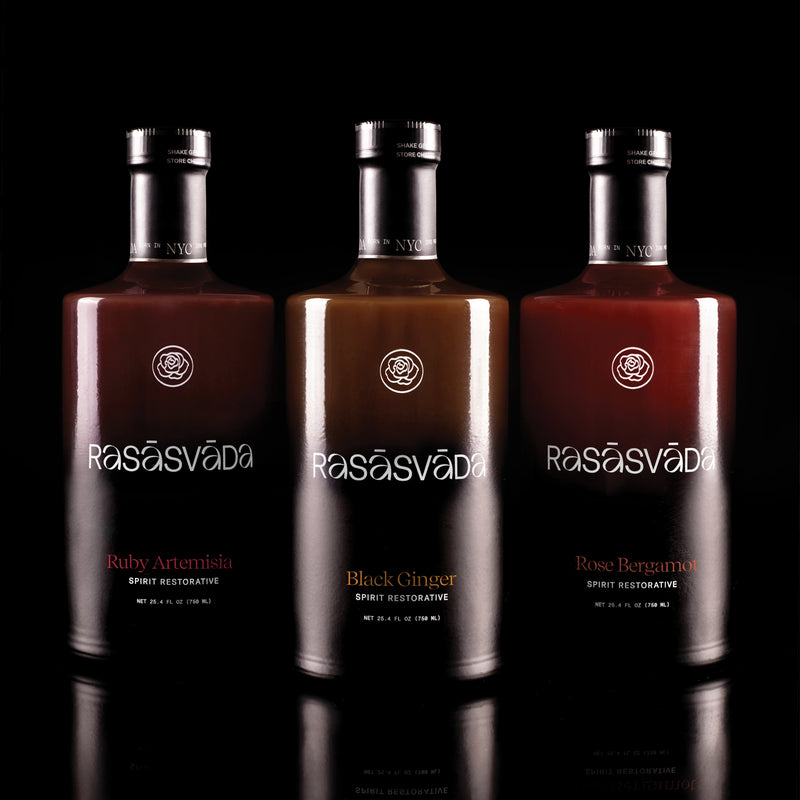
Support Your Sleep with the Rasāsvāda Discovery Set
Try all three expressions, featuring one 375ml bottle each of Ruby Artemisia, Black Ginger, and Rose Bergamot.
- Calm your mind with restorative botanicals
- Support restorative sleep
- Turn your evening wind-down into a ritual that supports your health
FAQs
Disclaimer
This content is for educational purposes only and is not intended as medical advice. Consult a qualified healthcare professional before starting any new herbal regimen, especially if you are pregnant, nursing, having existing medical conditions, or taking medication.
100% plants. 0% preservatives.
Sources
Antioxidants | Sleep Deprivation-Induced Oxidative Stress in Rat Models: A Scoping Systematic Review
Investigación y Educación en Enfermería | Evidence-Based Pathways to Healthy Aging: A Systematic Review and Meta-analysis of Lifestyle Interventions for Longevity and Well-Being
Antioxidants | Mitochondria Need Their Sleep: Redox, Bioenergetics, and Temperature Regulation of Circadian Rhythms and the Role of Cysteine-Mediated Redox Signaling
Journal of Sleep Research | Effects of Experimental Sleep Deprivation on Peripheral Inflammation: An Updated Meta-Analysis of Human Studies
Nutrition and Metabolic Insights | Saffron and Sleep Quality: A Systematic Review of Randomized Controlled Trials
The Journal of Nutrition | An Examination into the Effects of a Saffron Extract (Affron) on Mood and General Wellbeing in Adults Experiencing Low Mood: A Randomized, Double-Blind, Placebo-Controlled Trial
Nutrients | Effects of Saffron Extract on Sleep Quality: A Randomized Double-Blind Controlled Clinical Trial
Sleep Medicine | Effect of Rosa damascena on Improvement of Adults' Sleep Quality: A Systematic Review and Meta-Analysis of Randomized Controlled Trials